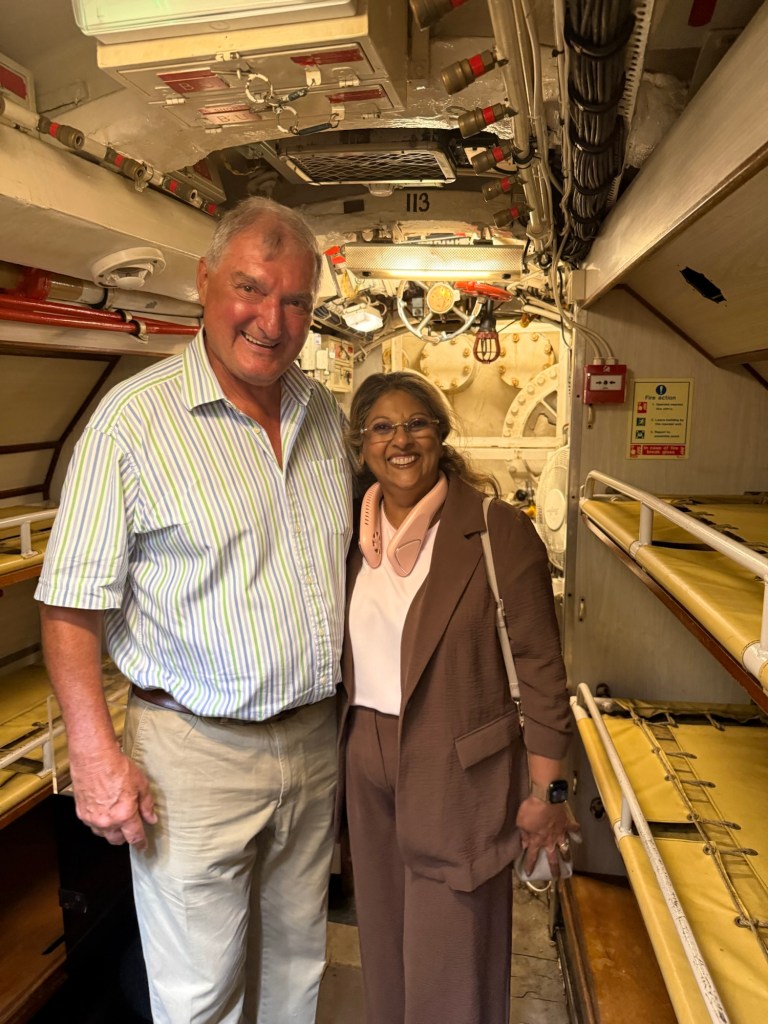
I have called Stafford home for 32 years. It is where I have lived, raised my family, built friendships and spent much of my life working to bring communities together. It is a town I care deeply about and one that I have always been proud to call home.
So imagine my disbelief when, walking through Stafford town centre on a beautiful, sunny autumn Saturday, I found myself listening to some of the most vile and openly racist rhetoric I have heard in a very long time.
I was informed that those speaking were associated with the Restore party. I cannot independently confirm their affiliation, but I can certainly describe what I heard.
There were passionate declarations about wanting “our town back”. There were complaints about children supposedly being the only white child in their classroom. There were familiar grievances about wanting to celebrate Christmas rather than some imagined imposition of “Winterfest”.
And then came the words that stripped away any pretence that this was simply about local identity, cultural traditions or community concerns.
They wanted to secure the future for white children.
There it was. Not a call for a better future for all children. Not a demand for stronger schools, safer streets or improved opportunities for everyone living in Stafford. But a chilling echo of the white supremacist David Lane’s infamous 14 Words, a slogan rooted in the belief that the future must be secured for white children.
For someone who spent ten years working in the world of counter-terrorism, counter-extremism and Prevent, hearing this in my own town centre was both deeply disturbing and profoundly sad.
I have spent years challenging extremist narratives, recognising the warning signs of radicalisation and helping others understand how hatred takes root. Yet here I was, on an ordinary Saturday afternoon, listening to the very language of racial division that I have spent so much of my professional life trying to challenge.
And I found myself asking: How have we reached a point where people feel so comfortable expressing such sentiments openly, in broad daylight, in the middle of our town?
The Myth of a Town Being Taken Away
The suggestion that Stafford has somehow been taken away from its white population is not simply offensive. It is fundamentally at odds with the demographic reality of our town.
Stafford remains an overwhelmingly white area. The notion that its identity, culture or traditions have been erased by ethnic minorities bears little resemblance to the place in which we actually live.
According to the 2021 Census, 93.4% of Stafford Borough’s population identified as white, while just 6.6% identified with other ethnic groups. Let those figures sink in. More than nine out of every ten residents are white, yet we are being asked to believe that the white population is somehow being displaced, its culture erased and its future threatened. By whom, exactly? The 6.6%? These figures expose just how detached from reality some of these claims have become.
But facts rarely seem to matter when fear becomes more politically useful than truth.
And what exactly does it mean to want your town back? Back from whom? From families who have lived here for generations? From people who work in our hospitals, teach in our schools, run local businesses, volunteer in our communities and contribute to the life of Stafford every single day?
Diversity does not diminish a community. It enriches it. Different backgrounds, cultures, faiths and experiences bring new ideas, skills, perspectives and opportunities. They help our children understand the world beyond their immediate surroundings and prepare them to live and work in an increasingly interconnected society.
And celebrating Christmas has never required us to deny anyone else’s right to celebrate their own traditions (you can read more here).
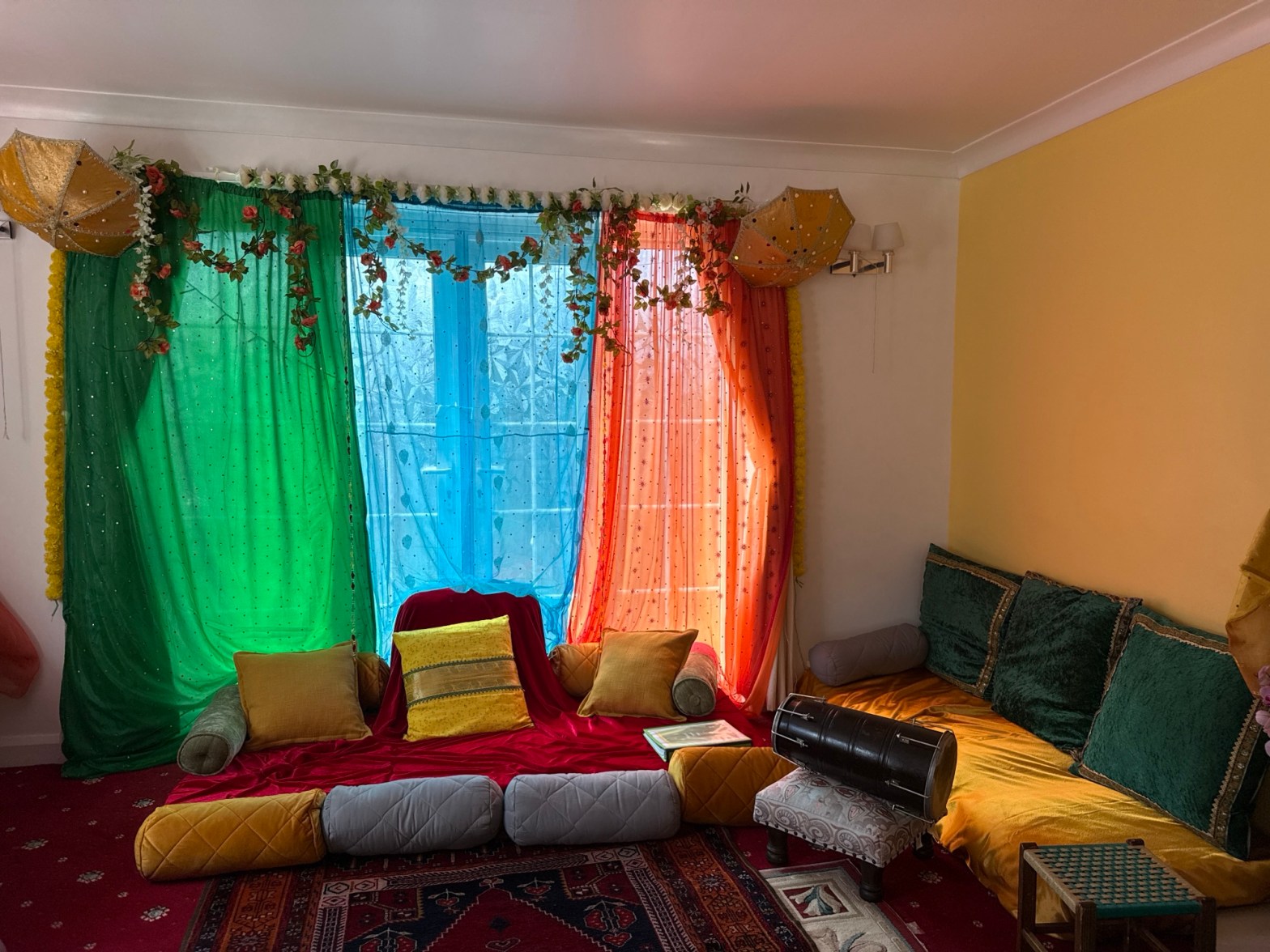
Christmas celebrations do not disappear because Muslim families celebrate Eid, Hindu families celebrate Diwali or Jewish families celebrate Hanukkah. Our traditions are not weakened by respecting the traditions of others.
What troubled me almost as much as the speeches themselves was the familiarity of the language.
These were not new arguments. They were the same tired narratives repeated across social media, amplified by online personalities and promoted by those who present themselves as fearless defenders of free speech.
Claims that Christmas is being cancelled. That white children are being displaced. That British culture is under attack. That immigration and diversity are responsible for every difficulty facing our communities.
These narratives are repeated so frequently that some people begin to accept them as established facts, even when the evidence tells a very different story.
And that is how misinformation becomes dangerous.
It creates grievances where none need exist. It encourages people to view their neighbours with suspicion. It turns difference into threat and ordinary social change into a conspiracy.
I have seen throughout my professional life how extremist ideologies exploit fear, uncertainty and a sense of injustice. They offer simplistic explanations for complex problems and identify convenient groups to blame.
The language may be dressed up as patriotism, cultural preservation or freedom of expression, but when the message becomes one of protecting the future of one racial group above others, we must recognise what we are hearing.
That is not patriotism. That is racial exclusion.
Freedom of speech is a fundamental democratic right. It protects the right to question government policy, challenge immigration decisions and express concerns about social change. Those are legitimate subjects for debate.
But freedom of speech also brings responsibility. It does not make every claim truthful, every argument reasonable or every expression of racial hostility beyond criticism.
Those who claim to defend free speech must also accept that the rest of us have the freedom to challenge their rhetoric, expose misinformation and reject racism.
Perhaps the saddest part of what I heard was the repeated reference to children.
Children were being used to justify fear and resentment towards other children.
What does it teach a white child to be told that having classmates from different ethnic backgrounds represents a threat? What does it teach a child from a minority background to hear adults publicly declaring that the future should be secured specifically for white children?
Our children do not arrive in this world fearing people because of their skin colour, religion or heritage. These attitudes are learned, reinforced and normalised by the adults around them and increasingly by the online spaces they inhabit.
We should be teaching young people to think critically, challenge misinformation, recognise manipulation and value the humanity of others.
Instead, some are being taught to see their neighbours as enemies.
I refuse to accept that the loudest and angriest voices were speaking for Stafford today.
This is a town of decent, generous and compassionate people. People who look out for their neighbours, support local charities, volunteer their time and recognise that community is built through relationships rather than racial boundaries.
I also refuse to surrender the language of belonging to those who believe it should be determined by skin colour.
My roots, my relationships, my contribution and my 32 years of life in Stafford are not somehow worth less because of my ethnic heritage. And neither are those of anyone else.
After all my years working to counter extremism, I know that hatred rarely begins with violence. It begins with words, with stereotypes, with misinformation and with the gradual normalisation of the idea that some people belong more than others.
That is why we cannot afford to dismiss what we hear in our town centres as simply angry people letting off steam.
We need to challenge falsehoods, question the narratives circulating online and refuse to allow racial resentment to masquerade as concern for our communities.
Most importantly, we need to speak up, particularly when silence becomes easier than confrontation.
Stafford does not belong to one race, one religion or one political movement. It belongs to all of us who call it home.
And the future we should be securing is not one reserved for white children, but one in which every child, whatever their background, can grow up safe, valued, respected and confident that they belong.
That is the Stafford I know. And that is the Stafford worth standing up for.