Belonging in Modern Britain

Earlier today, I had the pleasure of speaking at the Margins to Centre Conference 2025 at the University of York. The conference seeks to amplify the voices of marginalised communities and this year the conference explored the theme of Belonging. Here’s the text of my keynote:

=.=.=.=.=.=.=.=.=.=.=.=.=.=.=.=.=.=.=.=.=.=.=.=.=.=.=.=.=.=.=.=.=.=.=.=.=.=.=.=.=.=.=.=.=.=.=.=.=.=.=.=.=.=.=.

In The Tale of Despereaux, Kate DiCamillo writes

“Stories are light. Light is precious in a world so dark. Begin at the beginning. Make some light.”

In a world so often overwhelmed by fear, confusion, and division, storytelling becomes a sacred act. It is through stories that we remember who we are, where we come from, and what we are called to become. Stories don’t just entertain—they heal, they guide, they connect. They pass down truth wrapped in empathy.

When we tell stories—especially those of the marginalised, the unheard, the silenced—we are not just sharing information, we are shining light. And in spiritual traditions across the world, light is a symbol of hope, wisdom, and divine presence.

In Christianity, light is the symbol of Christ—the light that shines in the darkness. In Judaism, the lighting of the Menorah marks the miracle of resilience and faith. In Hinduism, the festival of Diwali celebrates the triumph of light over darkness, good over evil. In Buddhism, enlightenment itself is awakening into the light of truth. And In Islam, my own faith tradition, God is described as the Light of the heavens and the earth.

“God is the Light of the heavens and the earth. His light is like a niche in which there is a lamp, the lamp is in a crystal, the crystal is like a shining star, lit from ˹the oil of˺ a blessed olive tree, ˹located˺ neither to the east nor the west, whose oil would almost glow, even without being touched by fire. Light upon light!” (Quran Surah An-Nur, verses 35-37)

To tell a story, then, is to make light in a darkened world. It is to participate in something deeply spiritual—to spark connection, compassion, and courage. Personal stories shine a little light—and explain the meaning of belonging far better than I ever could in theory alone.

And that’s why I’d like to start with a story.

So this is a very recent story – something that happened a few weeks ago on Eid.

My children were all over and I’d managed to sneak upstairs to get dressed whilst they laid the table for dinner. I could hear lots of chatting and laughing but couldn’t make out any of the conversations taking place. As a mother whose children are now adults and have flown the roost, there is nothing quite so heartwarming as hearing your children laughing (and occasionally arguing) together as they used to do when they were younger. On this occasion, the conversation revolved around my ‘status’ whether I was British born or in their words “an immigrant”.

Now this is a word I’ve had hurled at me on many an occasion – personally, through the television, and more recently via social media. Those of us of a certain age will remember several British TV programmes that portrayed immigrants—particularly those from South Asian, Caribbean, and African backgrounds—through stereotypical or negative lenses. These portrayals often reflected the racial tensions and political climate of the time. Programmes that include Love Thy Neighbour, Mind Your Language, Til Death Us Do Part and It Ain’t Half Hot Mum, to name but a few. At the time, these shows were often hugely popular and considered “mainstream comedy.” However, they played a major role in reinforcing negative public attitudes toward immigrants and minorities,  with more sinister connotations than that being implied by my children. If I was an immigrant, my children were 1st generation immigrants not as they had thought 2nd generation immigrants.

So here I am, a British Muslim, a child of immigrants, an immigrant myself, who also happens to be a member of a nation that has been my home for over sixty years. My story isn’t unique; it’s the story of countless others who’ve made this country their own, striving to belong while navigating the complexities of inclusion, identity, and representation.

Belonging is a deeply human need. It’s the comfort of knowing you’re seen, valued, and accepted not tolerated. But for many, especially those of us from diverse backgrounds, belonging has often felt like something that we have to earn, as opposed to something that is inherently ours. My parents arrived here in 1965 with 6 children – the eldest 18 years old and the youngest just 11 months (I was the 11 month old). They will have come with fear, apprehension, trepidation but also with aspirations for their children, optimism for the endless possibilities that lay ahead – and as devote Muslims an unwavering trust in God. They worked tirelessly to build a life, contributing to a country that promised opportunity and fairness. Yet, as their child in the 60’s, 70’s and 80’s, I was raised in a world where my claim to Britain as home was constantly questioned — a world it seems we’ve sleepwalked right back into.

Identity is at the core of belonging. I’m British, Muslim, South Asian, a woman, a daughter, a wife, mother, mother-in-law and grandmother. But for too long, people “like me” have been asked to choose – am I British or Muslim, British or Pakistani, British or ‘other.’ Why do I, should I, have to choose? True belonging means being accepted for all of who I am, without having to hide any part of myself. It means understanding that being British isn’t just one story, but lots of different ones woven together.

Inclusion goes beyond tolerance. It’s about making space at the table, not just as guests but as equal members of society. It means seeing our stories reflected in classrooms, boardrooms, and in the media. It means hearing our voices in Parliament—not just as tokens to satisfy diversity quotas or to ensure legal compliance in candidate shortlists, but as genuine representatives with the power to influence and lead. Too often, minorities are used as fodder to tick a box, to ensure rules are not broken regarding the election of candidates, rather than being valued for their contributions and perspectives. Representation is not just about numbers; it is about influence, agency, and the power to shape the future. When young British Muslims see themselves reflected in positions of power, they don’t just aspire — they believe. They don’t want to be merely tolerated — a word that suggests people are simply putting up with them — but actively included, with their rights, dignity, and security fully upheld in society.

​In 2011, Baroness Sayeeda Warsi, then co-chair of the Conservative Party, stated that Islamophobia (a term I personally dislike so prefer to use the term anti-Muslim hatred) had “passed the dinner-table test.” By this, she meant that expressing anti-Muslim sentiments had become socially acceptable in polite society, even among middle-class individuals during casual conversations. She observed that while overt racism and homophobia were largely condemned, anti-Muslim remarks were often tolerated or overlooked. Over a decade later, in her 2023 keynote speech titled “Muslims Don’t Matter,” Baroness Warsi reiterated her concerns, emphasising that Muslims are still often excluded from decision-making processes and are held to higher standards than other citizens. She called for a collective effort to address and dismantle systemic anti Muslim hatred in British society.

The road to belonging is paved with countless challenges. We live in times where division feels stronger than unity, where difference is sometimes feared rather than embraced. Anti-Muslim hatred, racism, and prejudice still cast shadows over our collective progress.

Those of us who grew up without smart phones will know what I’m referring to when I mention the ‘Norman Tebbit cricket test’. In 1990, Norman Tebbit, a Conservative politician, suggested that you could measure the loyalty and integration of immigrants in the UK by asking which national cricket team they support—especially when England played against the country of their or their parents’ origin (e.g., India, Pakistan, the West Indies). Tebbit argued that if British-born people of immigrant backgrounds supported their parents’ home countries over England in sports, it showed a lack of allegiance to Britain and a failure to integrate. This was highly controversial at the time, as critics saw it as oversimplifying identity and ignoring the multicultural reality of modern Britain. It was seen as what today we would call dog whistle politics – a shout out to nationalism, implying that immigrants must erase their cultural heritage in order to be truly British. Many public figures, especially from ethnic minority communities, criticised the idea at the time, pointing out that cultural pride and national loyalty are not mutually exclusive—you can be proud of your heritage and still be loyal to the country you live in.

Now this was 35 years ago – but has much changed? Belonging should not be about proving our allegiance through something as trivial as sport, or whether we know the name of our local pub. It’s about our contributions, our values, and our commitment to the shared future of this nation.

Moreover, we cannot ignore the increasing abuse and hatred directed at Muslim communities by the extreme right wing over the last 20 years. Groups like the English Defence League (EDL), Britain First, Patriotic Alternative, and many other far-right groups who have sought to spread fear, division, and misinformation about Islam and Muslims. Their rhetoric fuels hostility, leading to real-life consequences – verbal and physical attacks, the vandalism of mosques, and the marginalisation of entire communities. This rise in violent right-wing extremism is not just a threat to Muslims; it is a threat to the very fabric of our society.

The power of this hatred was tragically demonstrated in the riots that erupted across the country following the attack in Southport – an attack committed by a man who was not a Muslim. Yet, despite this fact, far-right groups seized the opportunity to inflame tensions, using misinformation and fear to incite violence and target innocent Muslim communities. This reaction revealed how prejudice, rather than facts, continues to shape the narratives pushed by extremists. Such events should serve as a wake-up call for all of us: we must not allow hatred to dictate our national discourse, nor permit extremists to exploit tragedy for their own agendas. True belonging is about being seen and accepted for everything we are, without needing to shrink or hide parts of ourselves. It’s about recognising that British identity isn’t a single story, but a rich mix of many voices and experiences.

We need to recognise and celebrate the remarkable contributions of British Muslims in our society.

Such as Sir Mo Farah, who came to Britain on a boat, a refugee, now a four-time Olympic gold medallist who has inspired a generation with his resilience and determination.

Nadiya Hussain, who not only won the hearts of the nation as the Great British Bake Off champion but continues to use her platform to champion inclusivity and representation. Not to mention the fact that she also made the late Queens Elizabeth II’s 90th birthday cake!

Sadiq Khan, the first Muslim Mayor of London, whose leadership has demonstrated that British Muslims belong at the highest levels of public service.

Mo Salah – a powerful symbol, not just as an elite footballer but as a global Muslim icon—someone who has helped shift perceptions through both his excellence on the pitch and his character off it. Salah is unapologetically and proudly Muslim—he prostrates after scoring, thanks God in interviews, and shares Ramadan fasting and Eid publicly. As someone who knows so little about anything football related, even I will never forget the chant that reverberated through the stadium in 2018:

“Mohamed Salah, a gift from Allah
He came from Roma to Liverpool
He’s always scoring, it’s almost boring
So please don’t take Mohamed away”

His popularity among fans reflects how his presence and performance have contributed to fostering a more accepting and diverse environment within football culture.

Mishal Husain’s appointment as a prime-time BBC news presenter marked a historic moment — the first time a visibly Muslim woman held such a prominent role in British broadcast journalism. Her presence signalled that Muslim identity and mainstream British identity were not mutually exclusive. As the first high-profile Muslim woman in a prime-time role at the BBC, Mishal Husain shattered a glass ceiling for many who had never seen someone like themselves on screen in such a position of authority and trust. She became a symbol of what is possible for British Muslims, particularly women, in public life. In a media landscape that often frames Muslims through the lens of conflict, terrorism, extremism, or cultural difference, Mishal Husain stood out by simply doing her job with clarity, professionalism, and integrity. In doing so, she helped challenge narrow stereotypes and offered a new narrative of normality, competence, and credibility.

Humza Yousaf made history as the first Muslim and first person of South Asian descent to become First Minister of Scotland. His ascent to one of the highest political offices in the UK sends a powerful message: that young Muslim men can — and should — see themselves at the heart of national leadership. Humza Yousaf does not hide his Muslim identity; instead, he wears it with dignity while championing an inclusive, progressive vision of politics. He shows that you can be both unapologetically Muslim and deeply committed to public service, social justice, and civic leadership. He isn’t just a symbol — he’s a leader. For young Muslim men growing up hearing that they don’t belong, Hamza’s presence in power affirms that they do. His story disrupts the narrative that Muslims are always outsiders in British public life.

These individuals are just a drop in a very big ocean. How can we talk about the countless and often unrecognised doctors saving lives in the NHS frontline, artists, entrepreneurs, and activists shaping the cultural and social fabric of Britain. Muslims are an integral part of this country’s success.

I’m going to finish with another story – something that happened nearly 35 years when I moved to Wales and joined a new GP practice. When I walked into the surgery, the doctor (a man) didn’t look up just indicated to the chair next to his desk. He was looking at some notes on his desk. After an awkward silence, without looking up he says “so how the heck do I pronounce that then”. Not one to cower I responded “it can’t be that difficult – it’s only five letters – try it”. After another silence he says “hmm – Hifsa. So where the heck are you from then?”. To which I responded “Leeds – where are you from?”. His response was “no you know what I mean – where are you ACTUALLY from”. Again I replied “I’m from Leeds”. He then said – “no I mean where are your parents from” to which I again replied “they’re from Leeds too”. It was only at this point he actually looked up from his desk, realising he wasn’t going to get the answer he was for and decided to ask me how he could help me.

Belonging isn’t a gift granted by others – it’s a right that we claim. We don’t need to shrink ourself to fit into society’s narrow definitions. Our identity is not a contradiction; it is a bridge. Belonging isn’t just about fitting in; it’s about shaping the space we inhabit. We belong because we’re here. We belong because we contribute, we create, we build, and we serve. And by doing so, we ensure that Britain is a place where everyone, regardless of race, religion, or heritage, doesn’t just live—but truly belongs.

Ramadan Reflections: When Breaking Fast Has Felt Like Breaking Hearts

Ramadan is a month of reflection, gratitude, and spiritual renewal. Every year, I find joy in sharing images of my Iftar and Sehri, cherishing the community, the food, and the quiet moments of prayer. But this year, my heart has been too heavy for such celebrations.

Each day, the news has brought more images of devastation from Palestine—families breaking their fast amidst the rubble of their homes, parents weeping over the lifeless bodies of their children, and the echoes of airstrikes drowning out the call to Maghrib. This Ramadan, instead of celebrating the blessings on my table, I found myself grieving the loss of those who will never see another Ramadan.

In Gaza, Ramadan nights are not filled with the warmth of family gatherings but with the cold reality of displacement, destruction, and death. The images are haunting—children with eyes too weary for their age, women searching for loved ones beneath collapsed buildings, men with trembling hands offering their last morsel of food to someone hungrier than them. The violence has not ceased, the suffering has not abated, and yet, the world continues as if their agony is just another footnote in history.

Nearly 300 women and children were slaughtered by the Israeli army in a recent attack, adding to the ever-growing toll of innocent lives lost. Among them are wounded children, war orphans, who have no surviving family left to comfort them. Hospitals, meant to be sanctuaries of healing, have become targets themselves, with healthcare workers risking and often losing their lives to tend to the wounded. Journalists, whose duty it is to bear witness, have been deliberately targeted, with over 150 now killed for daring to report the truth. These are not accidents of war; they are deliberate acts of terror.

How can we speak of peace when there is no justice? How can we bring ourselves to celebrate Eid-ul-Fitr when our brothers and sisters are burying their children instead of feeding them? It is impossible to ignore that this conflict is not an accident of history but the direct result of the Israeli government’s choices—one that has prioritised land over lives, fleeting gains over faith, and power over peace. What we are witnessing is not just war—it is a systematic erasure of a people, their history, and their right to exist. And yet, in their grief, Palestinians continue to pray, fast, and hope. Their resilience is a testament to their faith, even as the world fails them.

Amid this catastrophe, the fate of innocent Palestinians and the Israeli hostages remains a painful open wound. Their release—one that could have brought solace to so many—has been jeopardised by men seeking glory over humanity. In their pursuit of power, they have chosen to prolong suffering rather than end it. Each passing day is another opportunity lost, another life at risk, another family torn apart. And still, the world watches, complicit in its inaction.

As Ramadan draws to a close, my prayers are with those who have lost their homes, their families, their very sense of security. I pray for the innocent children who did not live long enough to understand the world’s cruelty. I pray for the women who carry the weight of survival, and the men who stand steadfast despite overwhelming despair. I pray for the hostages, held in a fate not of their choosing, and for all those caught in the crossfire of leaders who value their own legacies over human lives. And above all, I pray that those who have lost their lives find eternal peace with our Maker, that their suffering is not in vain, and that justice will one day prevail.

God warns us in the Quran:

And do not incline toward those who do wrong, lest you be touched by the Fire, and you would not have other than God any protectors; then you would not be helped.” (Quran 11:113)

This verse serves as a stern warning against silence and complicity in the face of oppression. It reminds us that even passive support or neutrality in matters of injustice can have severe consequences. Remaining silent or failing to stand against wrongdoing allows injustice to persist and grow. True faith calls for action, for standing firmly on the side of justice, even when it is difficult or unpopular.

This Ramadan, I have not posted pictures of lavish meals. Instead, I bear witness. And I ask you to do the same. Pray, speak, share—because silence is complicity, and the world has been silent for far too long.

“O you who have believed, be persistently standing firm in justice, witnesses for God, even if it be against yourselves or parents and relatives” (Quran 4:135)

Misunderstanding Islam: A Response to Inflammatory Rhetoric in The Catholic Herald

The Catholic Herald is a London-based Roman Catholic monthly magazine, established in 1888. It claims to have approximately 565,000 online readers per month, with printed copies distributed across the UK, the US, and the Vatican. It was not a publication I was familiar with until today.

The article by Gavin Ashenden, published in The Catholic Herald this week, is deeply troubling—not only in its criticism of King Charles III’s recognition of Ramadan but also in its use of inflammatory language about Islam and the Prophet Muhammad (peace be upon him). Such rhetoric misrepresents both Islamic teachings and the King’s role as a leader in a diverse, multi-faith society. It is, quite simply, offensive.

The article’s assertion that King Charles is prioritising Ramadan over Lent is misleading. Acknowledging one religious observance does not mean neglecting another. The King has a longstanding commitment to interfaith dialogue. He is soon due to visit Pope Francis, showing his continued respect for Christianity. Recognising the importance of the sacred month of Ramadan fosters inclusivity and harmony, which should be celebrated, not criticised.

More offensively, the article refers to Prophet Muhammad (peace be upon him) as a “warmonger,” an unjust and inflammatory characterisation. The Prophet’s life was defined by mercy, justice, and reconciliation. While he defended his community when necessary, he consistently sought peace, as demonstrated by treaties like the Constitution of Medina. Such misrepresentations only serve to fuel division and misunderstandings between faith communities.

Furthermore, the timing of this offensive rhetoric makes it even more unacceptable. Ramadan is the holiest month in Islam, a time of deep spiritual reflection, worship, and heightened devotion to God. To use this sacred period to attack Islam and its Prophet is particularly disrespectful and shows a disregard for the values of mutual respect and coexistence that should define interfaith relations.

Additionally, the suggestion that Muslims worship a “different God” reflects a fundamental ignorance of theology. Islam, like Christianity and Judaism, is an Abrahamic faith, worshipping the same One God. The misconception that Muslims follow a separate deity ignores the deep historical and theological connections between these traditions.

Might I also take the opportunity to remind Mr. Ashenden that Pope Francis, the current Pope of the Roman Catholic Church, has consistently spoken about Islam in a spirit of dialogue, respect, and interfaith cooperation. Indeed, in 2013, he wrote: “We must never forget that they [Muslims] ‘profess to hold the faith of Abraham, and together with us they adore the one, merciful God.’” He has also spoken against anti-Muslim hatred, urging people not to judge Islam based on the actions of extremists.

Sadly, by using divisive language and perpetuating harmful stereotypes, the article undermines efforts towards interfaith respect and unity. If we are to build a just and peaceful society, we must reject inflammatory rhetoric and instead encourage mutual understanding between all faiths, especially during sacred times of worship and reflection.

I would recommend that Mr. Ashenden seek out a knowledgeable Religious Education teacher and consider attending some classes on Islam.

Preventing Future Tragedies: Rethinking UK’s Counter-Extremism Policies

On 20 January 2025, 18-year-old Axel Rudakubana pleaded guilty at Liverpool Crown Court to all charges related to the tragic events in Southport on 29 July 2024. These charges included the murders of three young girls, ten counts of attempted murder, and possession of a knife. Today, the judge sentenced the “evil” “sadistic” killer to a minimum of 52 years. Following his guilty pleas, Prime Minister Keir Starmer addressed the nation, expressing horror at the state’s failings that allowed the attack to occur. He highlighted the need for a comprehensive examination of counter-extremism systems, acknowledging that the face of terrorism has evolved, often involving lone actors inspired by violent online content. Home Secretary Yvette Cooper announced the establishment of an independent public inquiry to investigate the systemic failures that led to the tragedy and revealed that Rudakubana had extensive interactions with state agencies and a history of violent behaviour, including multiple referrals to the Prevent counter-radicalisation scheme, which failed to prevent the attack.

Prime Minister Keir Starmer’s speech brings a stark reminder, that whilst the nature of terrorism remains constant, the ways in which it manifests and how we address it, have been shaped by political and ideological biases. As someone who has been deeply involved in Prevent and the broader efforts to counter terrorism, this moment calls for an honest reflection on the challenges we face and the changes needed to protect our society.

For years, I and many others have raised concerns about the evolving nature of extremism in the UK. We have seen the troubling rise of extreme right-wing (XRW) ideologies, which have not only spread through social media but have also emboldened movements rooted in hate. Young men, in particular, have been increasingly radicalised by online platforms that amplify antisemitism, anti-Muslim hatred (two sides of the same coin, feeding into a broader culture of scapegoating and division, weaponised by extremists to fracture communities and undermine the social cohesion we work so hard to protect), misogyny and other forms of intolerance. These platforms glorify acts of violence, exploit vulnerable individuals, and normalise division and hatred.

While Prevent has always sought to address all forms of radicalisation, political directives have sometimes demanded a narrower focus—one that risks ignoring significant threats from XRW groups, which often target both Jewish and Muslim communities with equal ferocity.

The challenges we face have not been isolated to the UK. The release of far-right leaders by the Trump administration in the United States has sent shockwaves across the global counter-extremism community. The newly inaugurated President commuted the sentences of over 1500 individuals all of whom had been convicted or charged with federal criminal offences. Included in these numbers were over a dozen people, including a number of leaders, from extreme right wing groups Oath Keepers and Proud Boys. His inauguration has emboldened known hate groups and given legitimacy to ideologies that fuel violent extremism. This will have ripple effects here in the UK, where the transnational nature of far-right movements has allowed their influence to spread more widely and rapidly than ever before.

The global far right now operates with a dangerous sense of impunity, often coordinating across borders and using the internet to amplify their messages. The consequences are clear: a rise in hate crimes, greater polarisation, and a growing sense of fear among marginalised communities. These movements thrive on division, and without a robust, unified response, their influence will only continue to grow.

Regrettably, political decision-making has often hindered our ability to address these threats effectively. Under Suella Braverman’s leadership and with the influence of the Independent Reviewer of Prevent, we were instructed to focus primarily on Islamist extremism, even as evidence of growing threats from XRW groups became increasingly undeniable. This narrow, politicised focus has undermined Prevent’s broader mission to tackle all forms of radicalisation and extremism.

I had the opportunity to deliver a workshop on contextualising Islam to members of the Independent Reviewer’s incoming team before he formally took up his post. The team acknowledged its significance and found it both valuable and directly relevant to the challenges they would be addressing. However, despite an invitation to extend the workshop to the reviewer himself and his wider team following his appointment, this opportunity was not pursued. This represented a missed chance to foster greater understanding and approach the complexities of extremism with more nuance and balance. It also suggested that both the reviewer and his superiors had already predetermined the focus and outcomes of the so-called ‘independent’ review.

Contrary to the statement used by our Prime Minister, the face of terrorism has not changed, but fortunately the government has. I hope our new leadership will rise to the challenge and take all forms of extremism seriously. It is not about creating a new police department or introducing additional bureaucracy, but about recognising Prevent for what it truly is: a safeguarding initiative aimed at supporting vulnerable individuals before their actions escalate into terrorism. This must be applied consistently, regardless of ideology, or even the absence of an ideology, if the goal is simply to commit acts of violence against society.

Prevent must address the root causes of radicalisation in all its forms, whether motivated by political, religious, or other ideologies. The rise of global far-right networks, fuelled in part by international political decisions, has highlighted the urgent need for a comprehensive and unbiased approach. Adding to this threat, wealthy billionaires have exploited their ownership of social media platforms to amplify divisive narratives, spread hatred, and provide a megaphone for extremism under the guise of free speech. At the same time, the surge in antisemitism and anti-Muslim hatred demonstrates that no community is immune from the devastating impact of extremism. Addressing these interconnected issues requires a holistic strategy that confronts not only the ideologies but also the powerful enablers of hate.

As we reflect on the Southport attack and the broader challenges facing us, it is time to recommit to tackling extremism and terrorism in all its forms. Only through a balanced, proactive, and comprehensive approach can we hope to safeguard our society, protect vulnerable communities, and uphold the values we share.

Unity and Hope: A Vision for 2025

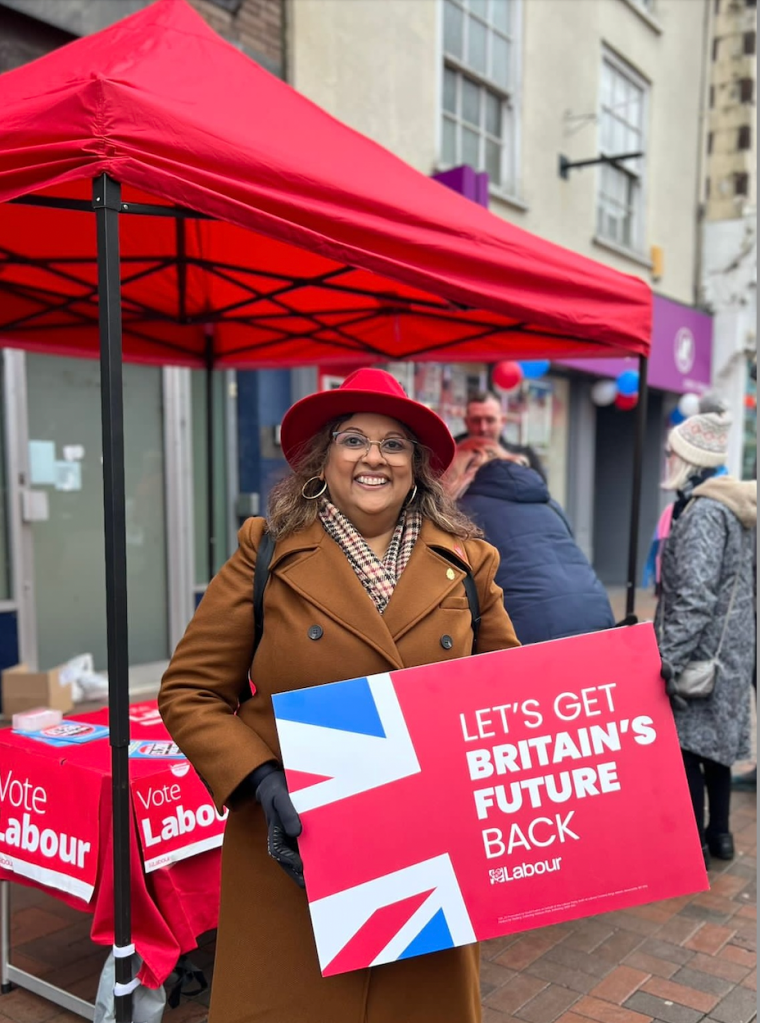
As I reflect on 2024, it was a year I had envisioned unfolding very differently, particularly in the political arena. In January 2022, I made the significant decision to leave full-time employment to focus on the goal of being selected as a Prospective Parliamentary Candidate (PPC) for the Labour Party in the next general election. I invested considerable time, energy, and financial resources into this endeavour, driven by my belief in the party’s values of fairness, justice, and equality. However, the support I believed I had within the party proved to be insubstantial, and despite my commitment and sacrifices, the opportunity I worked so hard for never materialised.

Instead, despite my delight at a landslide Labour victory in the election, 2024 became a year of profound disillusionment. It exposed the darker sides of politics—a world where deception, manipulation, and self-interest often take precedence over principles. Even more troubling was the realisation that some of those I encountered harboured deeply unsettling prejudices, demonstrating discriminatory attitudes and hostility towards Muslims. These experiences have been a stark reminder of the ongoing battle to confront dishonesty, prejudice, and bigotry, even within spaces that should uphold inclusion and integrity.

This journey has been both sobering and illuminating. While the outcome was not what I had hoped for, it has strengthened my resolve to fight for the values I hold dear. It has reminded me that the path towards justice and fairness is often difficult but always worth pursuing. Despite the setbacks, 2024 offered a valuable lesson: no matter how dark the moment may seem, on even the hardest days, to quote the great man himself, “happiness can be found, even in the darkest of times, if one only remembers to turn on the light” (Professor Albus Dumbledore).

On a personal note, 2024 marked a milestone as I turned 60. I am deeply grateful for my good health, my loving family, and friends who continue to enrich my life in countless ways. It was also the year I made the difficult but overdue decision to let go of an ambition I have held onto for years. Closing this chapter has brought clarity and allowed me to embrace the new opportunities and possibilities the future holds.

Throughout the year, I have created cherished memories with the people who matter most. From unforgettable holidays to moments filled with laughter, I have consciously chosen to celebrate life and embrace ageing with humour and defiance—deliberately deciding to “grow old with indignity” and joy.

As 2025 approaches, my hopes and prayers turn to a world in desperate need of healing and unity. I pray for joy, peace, and hope for everyone. I pray for the people of Palestine, that those displaced may one day return to their home and live with dignity and safety. I think of the bereaved, the hungry, the homeless, and the injured, as well as those separated from loved ones through no choice of their own. May they find comfort, healing, and reunion.

I also hold in my heart the people of Ukraine, Yemen, Sudan, Pakistan and Syria—nations that continue to endure unimaginable suffering. My prayers extend to our world leaders, that they may open their eyes to the precipice humanity is teetering on and find the courage, compassion, and wisdom to lead with integrity, prioritising the needs of the many over the interests of the few.

As we step into 2025, I carry forward the lessons of the past year—the pain it has brought, but also the clarity it has given. My hope is that we continue striving for a political system that genuinely reflects the values of fairness, equity, and inclusivity. I wish for a renewed sense of hope, a collective commitment to building a kinder, fairer world, and a future filled with light, love, and understanding for all. Let this be the year we rise above division, embrace compassion, and work together towards a brighter tomorrow.

Wishing everyone a happy and serene New Year. May 2025 bring us health, joy, and renewed hope. Let us strive for compassion, togetherness, and fairness for all.

Ethical & Religious Concerns of Assisted Dying Legislation: Why We Must Tread Carefully

“The experience of sitting with a fatally ill baby girl did not convince me of the case for assisted dying; it convinced me of the value and imperative of good end-of-life care.” (Gordon Brown)

The Terminally Ill Adults (End of Life) Bill will have its second reading in Parliament tomorrow, 29th November. This proposed legislation seeks to legalise assisted dying for adults with a terminal illness and a life expectancy of under six months. It claims to incorporate strict safeguards, including the individual’s voluntary consent, independent medical assessments, and oversight to prevent abuse. Proponents argue that it offers dignity and choice at the end of life. However, this complex issue raises profound ethical, societal, and faith-based dilemmas—questions I’ve been reflecting on since a conversation I had at the 2023 Labour Party Conference with an organisation advocating for this law.

Having researched and worked in palliative care, supporting cancer patients at the end of life and their families through one of the most difficult times imaginable, I am deeply concerned about the potential misuse of such legislation. Having also experienced the loss of both my parents—who received exceptional care in their final years, both from the NHS and through the steadfast support of my siblings—I recognise the complex dynamics at play. My concern is that this legislation could place undue pressure on vulnerable individuals, especially those lacking strong support networks, and risk exploitation or coercion during an already challenging time.

I am reminded of a nearby nursing home that my husband frequently visits to engage with residents. On one occasion, I accompanied him and encountered a range of individuals, each facing unique challenges. Some residents were entirely dependent on carers, others had family who visited sporadically—perhaps only at Christmas—and some were utterly alone, save for the occasional kindness of a neighbour. Reflecting on their circumstances, I ask myself: should these individuals be encouraged or expected to end their lives simply because of their dependence or isolation? My answer is unequivocal: no.

The Ethical Risks of Legalising Assisted Dying

Legalising assisted dying risks undermining the sanctity of life and creating a precarious situation for the most vulnerable in society—elderly, disabled, or terminally ill individuals, particularly those without a robust support system. I fear that such a law could erode societal protections for those in greatest need and exert subtle yet harmful pressure to consider ending their lives prematurely.

This legislation also represents a slippery slope. Despite assurances of “strict safeguards,” the potential for coercion, whether overt or subtle, cannot be overlooked. In a healthcare system already stretched thin, we may inadvertently normalise the idea of hastening death as a cost-saving measure or a way to reduce perceived burdens on carers or families. This, in turn, could damage the critical trust between patients, families, and healthcare professionals.

Instead of enabling assisted dying, we should focus on greater investment in palliative care and end-of-life support. A truly compassionate society does not encourage its most vulnerable members to end their lives but seeks to alleviate their suffering through holistic care.

An Islamic Perspective on Assisted Dying

As a Muslim, I find the Assisted Dying Bill deeply troubling for several reasons:

1. Sanctity of Life

In Islam, life is a sacred gift from God, and only God has the authority to give and take it. The Qur’an explicitly warns, “Do not kill yourselves, for indeed God is Most Merciful to you” (4:29). Assisted dying directly contradicts this principle, as it involves intentionally ending a life—an act viewed as interfering with divine will. Suicide is forbidden in Islam because it reflects despair in God’s mercy, and assisting in someone’s death is equated with taking a life unjustly.

2.Suffering as a Test

Islam teaches that suffering is part of life’s trials, a test of patience (sabr) and faith. Enduring such trials is seen as spiritually purifying and often rewarded in the hereafter. The Qur’an states, “And We will surely test you with something of fear and hunger and a loss of wealth and lives… but give good tidings to the patient” (2:155). To legalise assisted dying is to deny the spiritual significance of perseverance through hardship.

3. Protection of the Vulnerable

Islamic ethics emphasise safeguarding the vulnerable, including the elderly, disabled, and terminally ill. This proposed law could create societal or familial pressures on such individuals to consider ending their lives—violating the Islamic duty to protect and care for the weak.

4. Compassion and Care

Islam encourages alleviating suffering through compassionate care while preserving life. This is where palliative care plays a critical role—offering physical, emotional, and spiritual support without resorting to hastening death.

A Call for Compassionate Solutions

Rather than introducing legislation to end lives, we should focus on improving palliative care, hospice services, and mental health support for terminally ill patients and their families. A society’s humanity is reflected in how it supports its members through suffering—not in facilitating their deaths.

The primary role of healthcare professionals is to heal and provide care. Introducing assisted dying could fundamentally alter this trust. If doctors are empowered to facilitate death, would we, as vulnerable patients, still seek their help without fear? Where does this end? Might we eventually extend such laws to include mental health conditions or disabilities? Could we risk a dystopian shift akin to the Aktion T4 program of the 20th century, which targeted those deemed “unworthy of life”?

The Universal Value of Life

Regardless of one’s faith or belief system, human life has inherent dignity and worth, irrespective of health or suffering. Assisted dying has the potential to leave lasting emotional scars on families and caregivers, who may grapple with guilt or regret. It risks normalising a societal mindset that prioritises convenience over compassion.

From an Islamic perspective, the Assisted Dying Bill contradicts core principles about life’s sanctity, the purpose of suffering, and our role within God’s divine plan. On a broader ethical level, it poses grave risks to the vulnerable, undermines the foundations of medical practice, and sets us on a dangerous path where life’s value is conditional upon health or ability.

A truly compassionate society should be defined by its unwavering commitment to preserving and nurturing life, not one that facilitates the premature ending of life, particularly for the most vulnerable among us. A society that values life in all its stages, and that seeks to alleviate suffering through care, compassion, and support, rather than resorting to a legal framework that could encourage vulnerable individuals to end their lives before their time. True compassion lies in creating environments where people, especially those facing terminal illness or immense hardship, feel supported, loved, and empowered to live their remaining days with dignity, not in a society that gives them the option to leave it all behind.

“Euthanasia and assisted suicide are never acceptable acts of mercy. They always gravely exploit the suffering and desperate, extinguishing life in the name of ‘quality of life’ itself”. (Pope John Paul II)

Exploring Interfaith Unity at the Abrahamic Family House

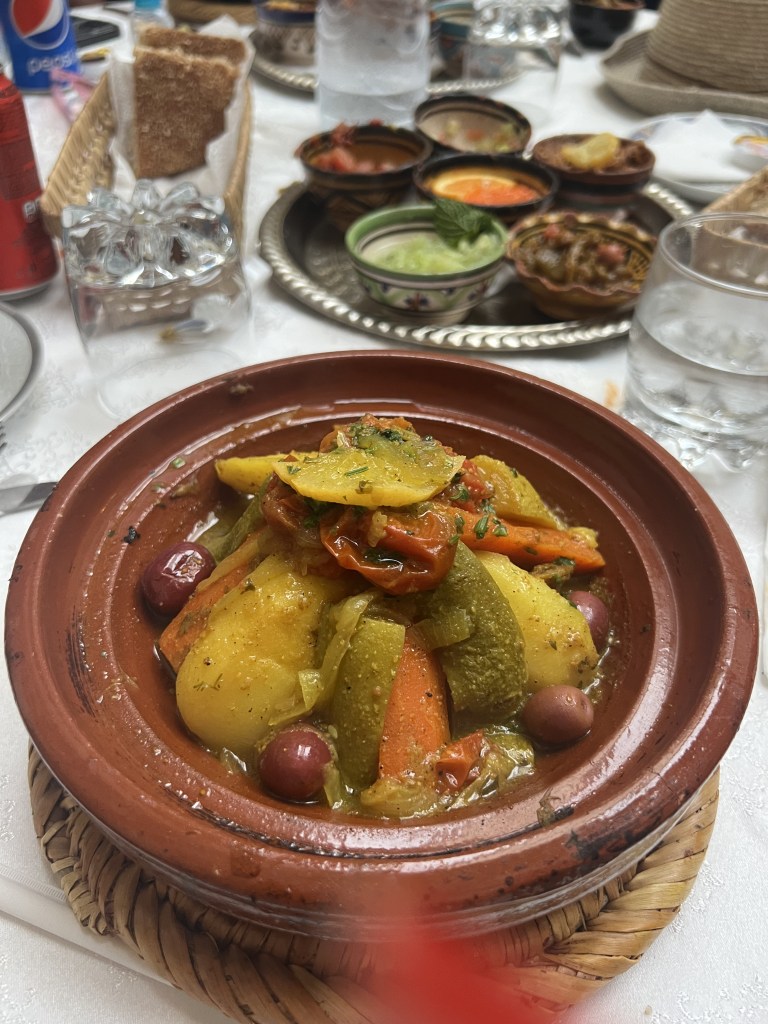
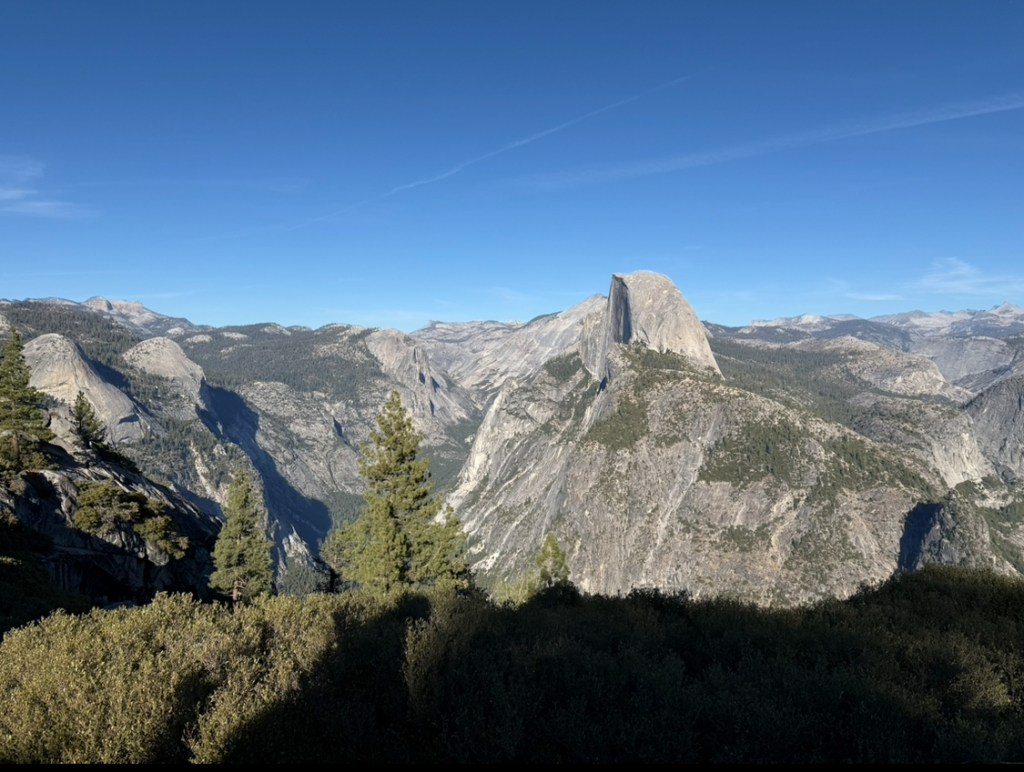
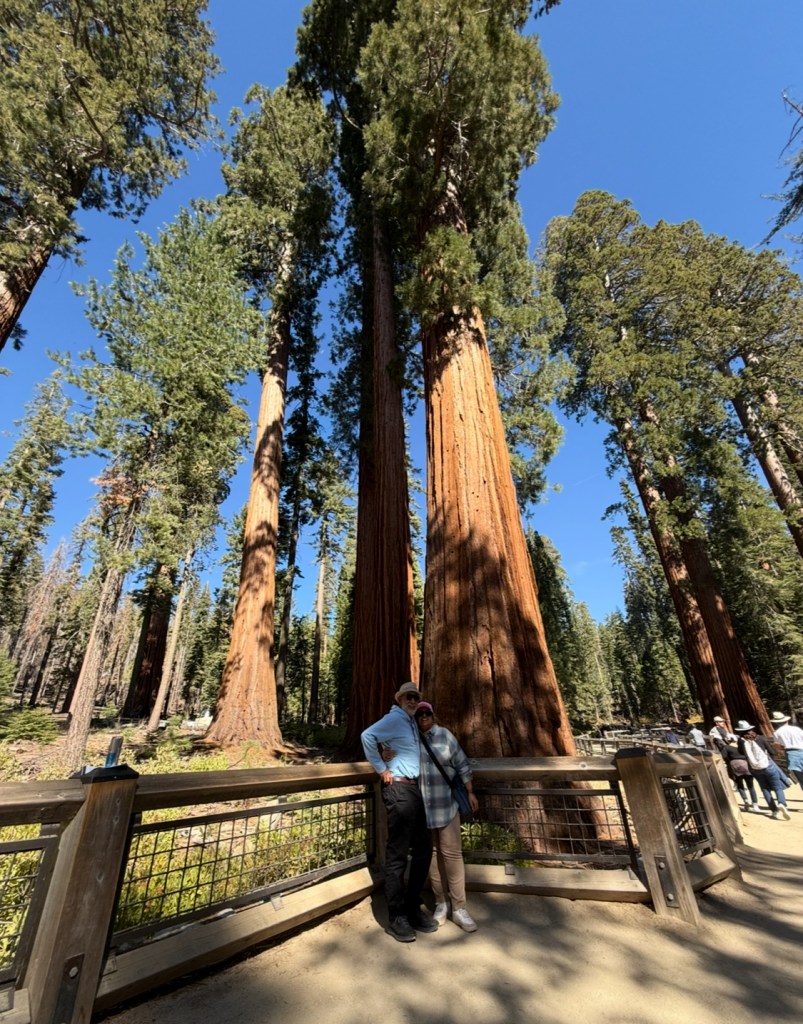
This year, I’ve been fortunate to journey to some truly remarkable places. I’ve marvelled at the timeless pyramids of Giza and prayed Salat-ul-Jummah in the awe-inspiring Sultan Hassan Mosque in Cairo. The vibrant, sapphire-blue waters of Rabat, framed by rugged cliffs and golden sands, were as enchanting as the tagines we savoured each evening. In Yosemite, the warm Californian sun seemed to magnify the divine presence as the towering sequoias reached toward the heavens. Everywhere I have been, I have been reminded of the boundless beauty of God’s creation. I understand that many may never have the chance to experience even a small part of these wonders, which makes each encounter all the more precious.

Every place I’ve visited has left me with cherished memories, but there is one that filled me with emotion so profoundly that I’ve longed to return since the moment I left. It feels especially fitting to reflect on this experience during Interfaith Week, a time when people from diverse faiths, beliefs, and spiritual paths have been coming together to discuss the importance of collaboration, mutual understanding, and sharing our vision for a just and compassionate world for all.

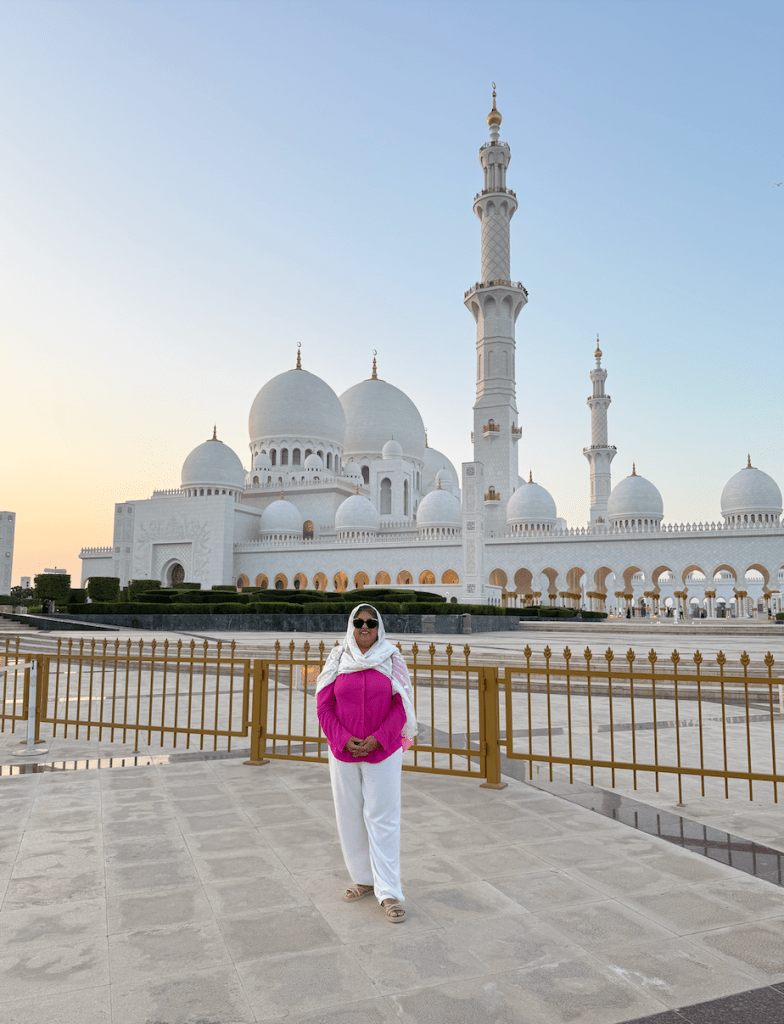
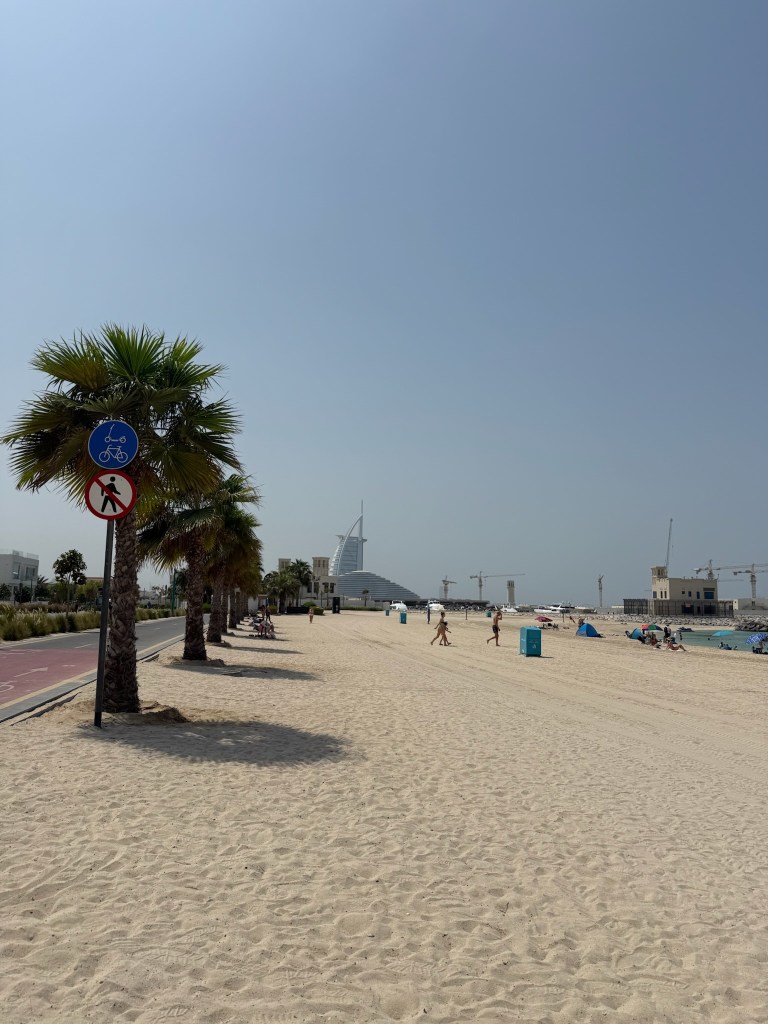
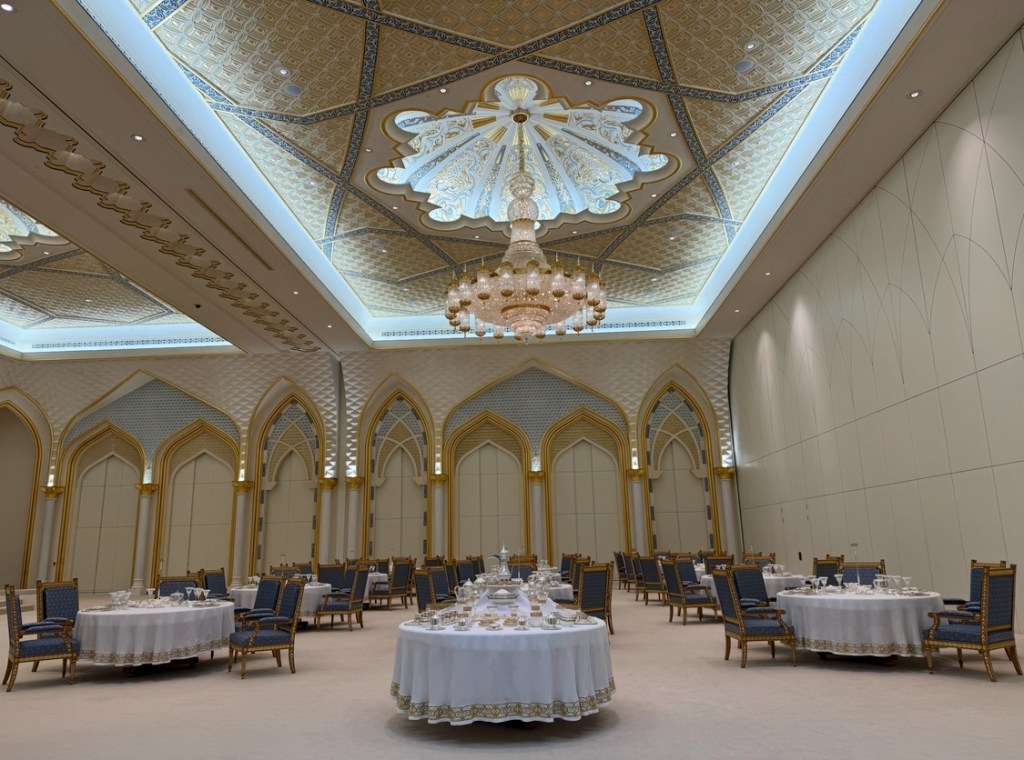
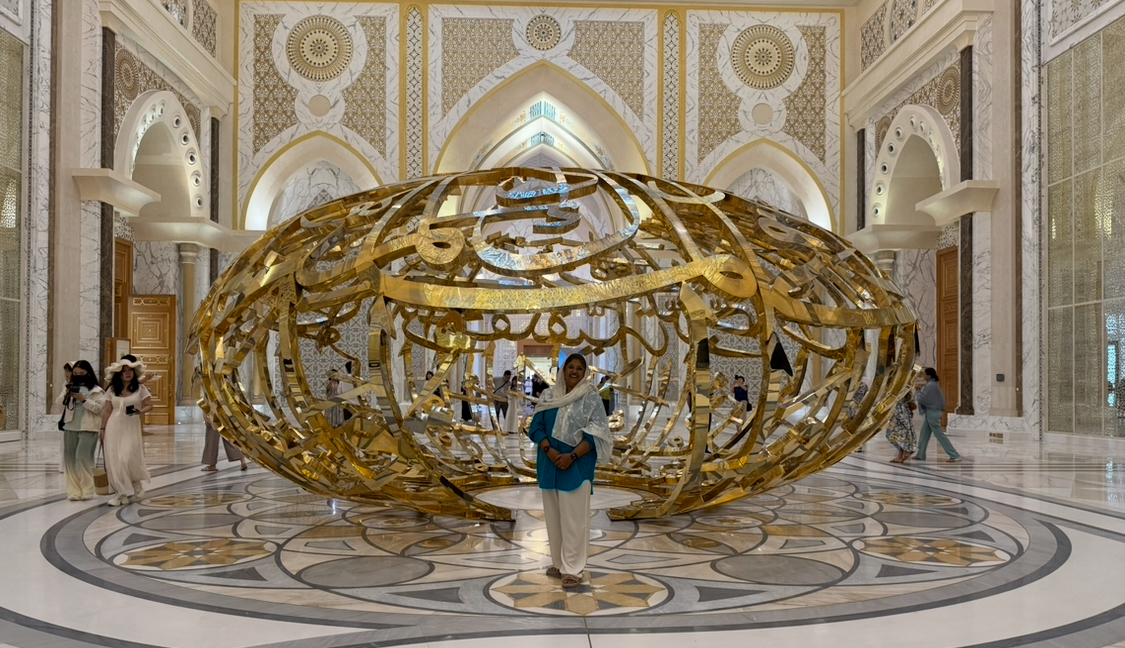
I hadn’t fully appreciated the range of places to explore until arriving in Abu Dhabi when I began researching things to see. Whilst Dubai is often everyone’s go-to destination, I found myself somewhat underwhelmed by it. Aside from the impressive aquarium in the mall, the city felt somewhat soulless, and I’m not sure it’s a place I’d return to anytime soon. However, the white sandy beaches were a sight to behold, though scorching hot under the intense rays of the sun. The grandeur of the Qasr Al Watan Palace was magnificent, but it was the regality of the Sheikh Zayed Mosque that took my breath away, leaving me wishing I had more time to simply sit, pray, and absorb the sacred surroundings of the mosque. I felt truly blessed to have performed not one, but two Salat-ul-Jummah prayers there—an experience I will always treasure.

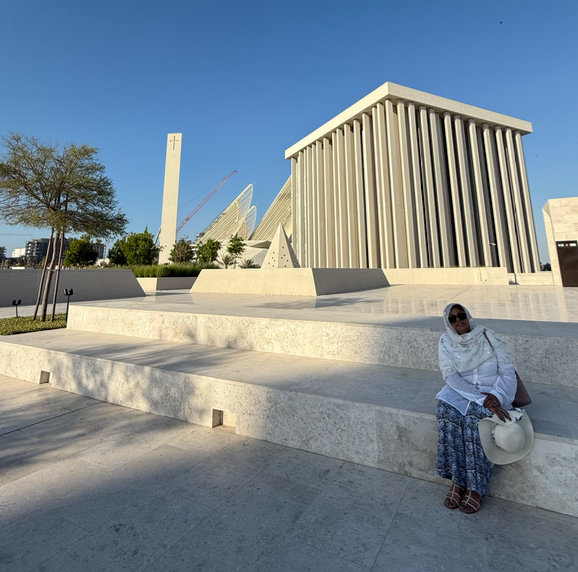
But it was the Abrahamic Family House in Abu Dhabi that truly left me speechless. A stunning testament to the beauty of unity and diversity, it brings together three iconic places of worship—a mosque, a church, and a synagogue—within one tranquil architectural masterpiece. Places of worship—whether mosques, churches, temples, or synagogues—should serve as sanctuaries where all who enter, regardless of faith, religion on creed, experience a deep sense of peace and serenity. Few places have provided such profound calmness as this one. The Abrahamic Family House is not just a physical space, it stands as unique symbol of interfaith dialogue, unity, and understanding in a complex world. The buildings, white, graceful, and minimalist, use light and space to exude the feeling of stillness, respect, and profound peace.

Gazing at each structure, it is clear, though subtle, how the three religious traditions of Islam, Christianity, and Judaism are reflected in the designs, while their presence within the same grounds—just a stone’s throw apart—speak to our shared values of compassion, tolerance, and coexistence. The soaring arches, intricate carvings, and expansive halls, creates a reverential atmosphere, calling on visitors to connect with something greater than themselves. The ritual vibrations that resonate in the form of the azaan and chanting of sacred texts—reminds believers of the sacredness of the moment, fixing their attention on the here and now. Within the silence, carried on the gentle breeze, you can hear the soft whispers of collective prayer, where worshippers lay bare their souls in search of solace and inner peace, seeking to align their hearts with their faith.

The lush gardens, serene walkways, and the quiet contemplation of both worshippers and visitors stand as an example of a world I long to witness: a world of hope, respect, compassion, and acceptance—where differences are celebrated, not feared. Above all, a world where there is justice for the oppressed, where no one lives in fear, poverty or hunger.

In a world often marred by turmoil, division, and conflict, interfaith dialogue and understanding are more important than ever. Our religious differences have historically been a source of tension and violence, but they also hold the potential to be a bridge to peace when approached with mutual respect and empathy. Initiatives like the Abrahamic Family House can promote the idea that, despite our diverse beliefs, we share human values of compassion, justice, kindness, and the pursuit of peace—values that transcend religious boundaries. By nurturing communication and cooperation between our different faith communities in this country, we can create spaces where people can come together to address common challenges, whether they be social injustice, poverty, or global crises. In a fragmented world, interfaith cooperation is a powerful tool for building a culture of peace and tolerance, with our near neighbours and those further away, reminding us that despite these differences, we are all part of the same global human family—and there is far more that unites us than divides us.

“But I am like a green olive tree in the house of God. I trust in the mercy of God for ever and ever”. (Psalms 52:8)

Preventing Radicalisation and Hate Crimes: Strategies for Educators and Communities

Children across the country have finally return to school after the six-week summer break and parents have breathed a sigh of relief. Many young people will bring with them cherished memories of family vacations, trips to theme parks, and days at the beach. However for Bebe King, Elsie Dot Stancombe and Alice Dasilva Aguiar, the summer began and abruptly ended in unimaginable tragedy. Their lives were brutally taken and for their grieving families, this season will forever be marked by sorrow.

In the aftermath of these horrific murders, the situation became even more troubling. Many children heading back to school have tragically been exposed to disturbing scenes of violence, having watched riots unfold on their television, smartphone and social media feeds. These young people have been inundated with a barrage of misinformation and lies, not just online but within their own communities and, at times, even from within their own home environment.

The so-called “anti-immigration” and “race riots” that erupted across the country were driven by false information spread by certain online “charismatic leaders” and “hate preachers.” These riots were not simply random acts of ‘thuggery’, as some of our politicians have suggested, but a reflection of deeply ingrained anti-Muslim and Islamophobic hatred. Communities with significant Muslim populations were particularly targeted—mosques were vandalised, Muslims were harassed, hotels housing refugees were attacked, police were assaulted, and businesses were looted. Yet, despite these clear signs of hatred, no major media outlet or political figure has fully recognised the true nature of these events.

The riots spread to cities like Southport, Birmingham, Southampton, Leeds, Stoke-on-Trent, Blackpool, and Hull, with over 1,000 arrests made and 300 people so far receiving prison sentences totalling 488 years. The violence was fuelled by unfounded rumours that the Southport attacker was both an immigrant and a Muslim, prompting far-right groups to organise large-scale anti-Muslim protests. Had these attacks targeted churches or synagogues, or if the victims had been Christians or Jews, would we hesitate to label these incidents as anti-Christian or anti-Semitic? Why then, do we avoid calling these attacks what they clearly were—blatant anti-Muslim hate crimes? Why are the media and politicians continuing to refer to them merely as race riots or crimes, rather than acknowledging them as acts of far-right extremism? In recent months, we’ve witnessed pro-Palestinian demonstrators labelled as Islamist extremists and anti-Semites. Yet it seems that in today’s society, how people and events are judged depends largely on the cause they represent.

As schools reopen, there are real concerns about how educators will navigate the difficult challenges that arise. Some of these young people may have participated in the riots or been radicalised by what they’ve seen, both online and in real life. Disturbingly, images have surfaced of children, sometimes accompanied by their parents, chanting anti-Muslim slogans. What will schools do when these children bring those chants into the playground? Are educators adequately prepared to manage such complex and potentially volatile situations?

We must urgently find solutions to prevent a generation of young people from growing up with hatred towards those of different faiths, beliefs, or skin colours. Drawing on my extensive experience of working with young people and as a Prevent Practitioner, I am convinced that combating radicalisation requires multifaceted, community-driven strategies. These approaches must promote dialogue, inclusivity, and education.

One important approach could involve organising workshops in schools, colleges and community centres to promote understanding of different cultures, religions, and ethnicities. These programmes should encourage open discussions about racism, extremism, and the impact of hate speech, with qualified practitioners, helping young people critically assess misinformation and stereotypes. Integrating lessons about the history of racism, colonialism, immigration, and the dangers of far-right extremism into the curriculum can also foster a more nuanced understanding of these issues.

Mentorship programmes can also play a significant role in this effort, pairing at-risk youth with positive role models from diverse backgrounds who can offer guidance and support. Mentors can help young people find a sense of belonging and purpose, countering the isolation that often leads to radicalisation. Similarly, encouraging young people to take leadership roles in organising community events, volunteer efforts, and local projects can empower them to foster social cohesion and inclusivity.

Regular forums that bring community members of different backgrounds together to discuss their concerns in a respectful environment can also be effective in de-escalating tensions and promoting understanding. For young people who have been involved in extremist activities or hate crimes, we need to see restorative justice programmes that bring them together with victims for mediated conversations, which help humanise the “other” and encourage healing and accountability.

Strengthening local organisations, community centres, and faith-based groups that provide safe spaces for youth and marginalised communities is another critical step. By fostering partnerships between religious and cultural groups, these institutions can help build bridges between different communities and reduce suspicion and animosity.

Finally and I believe most crucially, we must equip young people with media literacy skills. Schools and community programmes can teach students how to critically evaluate the information they encounter online, helping them recognise fake news, misinformation, and extremist propaganda. Providing parents with the resources they need to discuss extremist content with their children and monitor their media consumption is another important layer of protection against radicalisation.

By tackling the root causes of radicalisation, such as social isolation, misinformation, and economic insecurity, while also building stronger, more inclusive communities, we can help prevent future tensions and society can play a major role in building resilience and steering our young people away from far-right ideologies.

A week in Ramadan 2024 (1445 AH)


Today marks the 18th day of Ramadan, and as is customary each year, this month spirals into a whirlwind of activity. It’s a period filled with exhausting early morning wake-ups for suhoor, the usual daily routines compounded by the effects of reduced food and sleep. Yet amidst the hustle and bustle, with numerous other engagements unfolding, time seems to slip away faster, contributing to the weariness. However, despite the fatigue, the experience is undeniably rewarding and enriching. I wouldn’t alter any part of it. Alongside reconnecting with our children and grandchildren—entailing frequent travels along the M6/M40/M1 & M25—I’ve had the pleasure of attending various events. While not all directly linked to Ramadan, they bear relevance to its essence in some form or another.

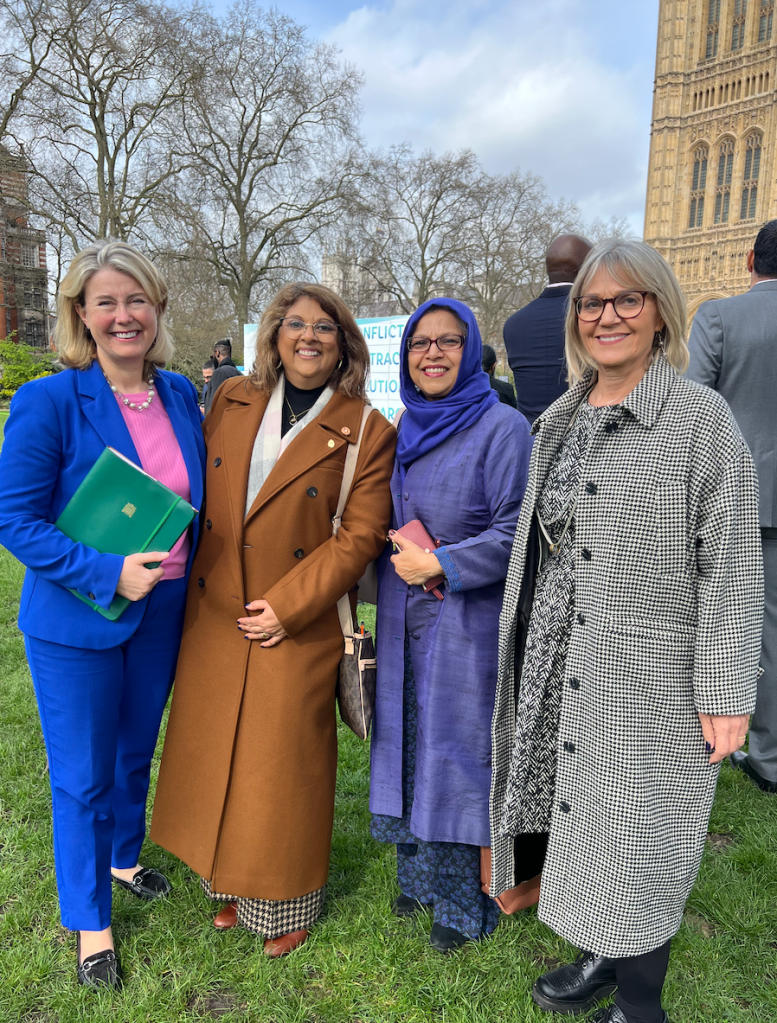
Last week, I had the pleasure of supporting and attending an event in Parliament organised by the Sir David Amiss UK Children’s Parliament, in collaboration with the Association of British Muslims and Football for Peace. Children from Muslim, Jewish, and Christian backgrounds united to dismantle a symbolic “Wall of Division” for water security, sending a powerful message that despite our cultural and religious differences, we can and must collaborate on issues of global significance. This event shed light on the urgent matter of water security affecting communities worldwide.

I was particularly impressed by the work of The Sir David Amess UK Children’s Parliament, which aims to empower young voices and cultivate an understanding of fairness and democracy. Through partnerships with organisations like Football for Peace and the Association of British Muslims, they provide a platform for children to engage in meaningful dialogue and take action on issues shaping their futures.

On Saturday, I had the privilege of attending a bar mitzvah at The Ark Synagogue in Northwood. For those unfamiliar, a bar mitzvah (meaning “son of the commandment” in Aramaic) or bat mitzvah for a girl, is a significant ceremony in Jewish tradition that signifies the transition of Jewish children from childhood to adulthood. According to Jewish law, this milestone typically occurs when a Jewish boy or girl turns thirteen years old. During the ceremony I attended, the young boy was called to the Torah (the Jewish sacred text) to read a portion of the weekly Torah portion in Hebrew, demonstrating his commitment to observing Jewish laws and traditions as an adult member of the community.

Meeting and conversing with Rabbi Aaron Goldstein and numerous members of the congregation brought me great joy. It was my inaugural experience attending a bar mitzvah, and I was thoroughly impressed by the confidence shown by the young person as he spoke and eloquently explained the Hebrew text he was about to read. His clarity was immensely helpful to many of us present. Especially moving were the prayers offered by Rabbi Goldstein for the safety and security of both Israelis and Palestinians.


The day concluded with a delightful iftar shared with my eldest son’s in-laws. Ramadan always presents a delightful chance to reconnect with family and friends we may not have seen for some time. It’s a period for spiritual contemplation and self-discipline, offering us the opportunity to deepen our gratitude for the everyday blessings we often overlook, such as food and clean water. Additionally, Ramadan nurtures empathy and compassion for those less fortunate, especially in our world marred by conflict. It serves as a unifying force, bringing families and friends closer together, fostering stronger bonds, and promoting a sense of togetherness and unity.


On Tuesday, I received an invitation to join an iftar gathering at the home of a Jewish friend. It was a heartwarming scene as Jewish, Muslim, and Christian sisters convened just before Maghrib to share in breaking our fast together. We engaged in prayer, gathered around the table, and dined together. Amidst discussions about the distressing situation in Gaza and the events of October 7th, including the hostages, one sentiment remained steadfast: the importance of preserving relationships between British Muslims and British Jews. Interestingly, many of us harboured similar concerns about attending—not questioning the decision to join, but rather how our respective faith or community members might react knowing we were “breaking bread” with those of other faiths. However, what became evident was our collective understanding that, as women, we approach things differently, and therein lies great strength. The following prayer was read before we ate and I shall end with these very powerful words, written by Kamran Shazad from the Bahu trust in Birmingham:

Oh God, You are the Creator, the
All-Powerful, the Sustainer of all life

Oh God, we are gathered here today with our
interfaith friends to show solidarity with refugees, Ya Allah, give us the
strength to show more compassion for their plight, soften our hearts to their
situation and guide us in seeking justice and mercy on their behalf.

Oh God, we pray for an end to the wars,
poverty and human rights abuses that drive desperate people to become refugees
in the first place.

Oh God, we cannot sit here in prayer and not
hold in our hearts the crisis that we are seeing in the Middle East.

Ya Allah, let
violence end in the region.

Oh God,, our hearts break for those killed
and those left behind—for the orphaned child, the injured elderly, those
abducted and families desperate for safety.

Oh God, we pray for those who have lost
loved ones.

Oh God, please protect and provide for those
who have been abducted and bring them home safely.

Oh God, let them be
reunited with their loved ones.

Oh God, we pray for the opening of
humanitarian corridors to allow food, essentials and medical supplies to reach
those in need.

Oh God, give strength to the suffering people
in the face of the escalating humanitarian crisis

Oh God,, we pray that aid workers be able to
rescue the injured, comfort the grieving and help rebuild many lives.

Oh God, we pray for peace and reconciliation
to overcome conflict.

We ask that you give wisdom and direction to
our global leaders and those in power who have the ability to impact the course
of this conflict.

Oh God, many friends have come together
today for the greater good, I beg you to shower us with your blessings of
guidance and bring us all to goodness.

Oh God,, strengthen the bonds of friendship
between us, help us to be bold advocates and to be strong agents of peace in
our own communities.

Ameen

“O humanity! Indeed, We created you from a male and a female, and made you into nations and tribes so that you may ˹get to˺ know one another. Surely the most noble of you in the sight of Allah is the most righteous among you. Allah is truly All-Knowing, All-Aware”. (Quran 49:13)

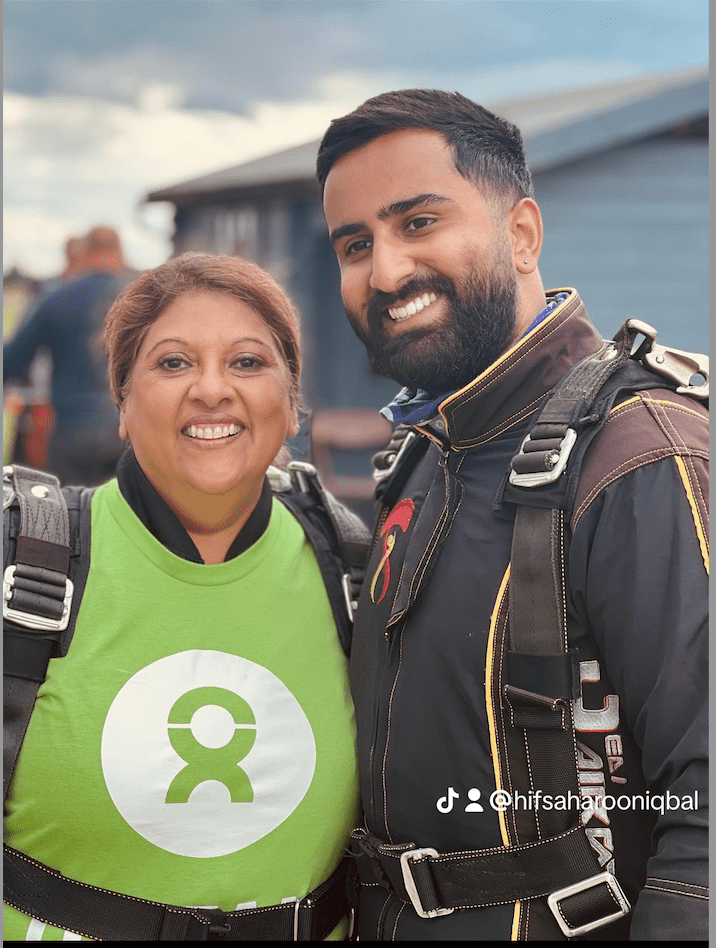
(PS. If you’ve found my blog enjoyable and informative, kindly consider supporting one of the charities I’m spotlighting through my upcoming skydiving event in July! Your contribution, no matter how small, can make a meaningful difference to peoples lives. To donate, simply click on the link provided. Thank you sincerely for your generosity in advance! https://justgiving.com/team/mumandsonmissionpossible

Christmas & Farewell to 2023

I am looking forward to seeing the back of 2023. The last few months have weighed heavily on my heart and on my soul. This is the first time in many years I haven’t sent any Christmas cards to friends or neighbours. I haven’t put up a Christmas tree, a seasonal ritual that is designed to bring a little warmth and cheer into the dark winter evenings. Because no matter how many lights we turn on, how many candles we burn, the darkness that surrounds us, isn’t one that can be eradicated by candles, fairy lights, tinsel and baubles. 

In 2014, as party of a Christian -Muslim programme, I visited the Holy Lands and one of the many places I visited was The Church of the Nativity in Bethlehem, built on the site where according to Christian tradition, it is believed Mary gave birth to Jesus. For reasons that require no explanation, Christmas this year has been cancelled in Bethlehem. A land in turmoil. A land witnessing much death, misery and destruction. The cynic in might say, well obviously no one wants to travel to an area of ongoing conflict so cancelling Christmas might be a sound business decision and one based on common sense. But I would like to believe it is more than that. I would like to believe it is because we are being reminded that Jesus too was born into a world where children were being massacred by a tyrant, where a family had to flee their home with nothing, with nowhere to go, in search of a place of safety and security.

I hope and pray that 2024 brings peace to the world and comfort to the bereaved. I pray those being held to ransom are released and world leaders find a solution that leads us out of this very dark period in world history.

Wishing you and your families peace and goodwill this Christmas. Praying for peace and for the safety of all our children.

On Children

And a woman who held a babe against her bosom said
“Speak to us of children”

Your children are not your children
They are the sons and daughters of life’s longing for itself
They come through you but not from you
And though they are with you yet they belong not to you

You may give them your love but not your thoughts
For they have their own thoughts
You may house their bodies but not their souls
For their souls dwell in the house of tomorrow

Which you cannot visit, not even in your dreams
You may strive to be like them
But seek not to make them like you
For life goes not backward, nor tarries with yesterday

You are the bows from which your children
As living arrows are sent forth
The archer sees the mark upon the path of the infinite
And he bends you with his might

That his arrows may go swift and far
Let your bending in the archer’s hand be for gladness
For even as he loves the arrow that flies
So he loves also the bow that is stable

From The Prophet By Khalil Gibran