Dear Prime Minister
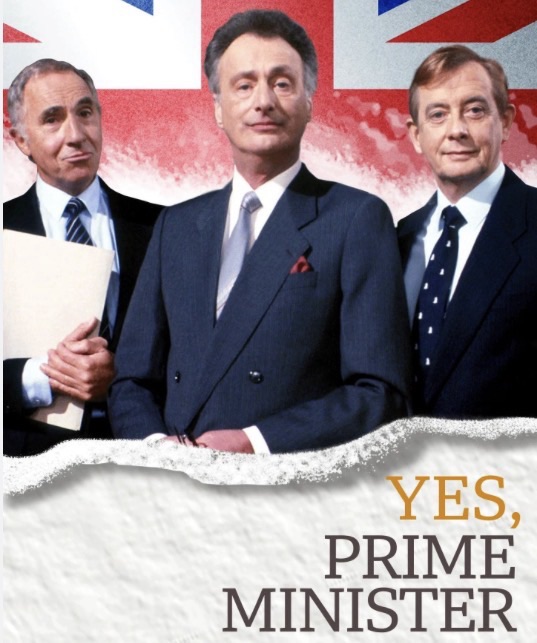
No, this isn’t another episode of Yes, Prime Minister. It’s a plea not to become one.
First, congratulations on becoming Prime Minister.
I have to admit, your arrival in Number 10 has made the latest Cabinet reshuffle considerably more entertaining than The Red Wedding. British politics rarely surprises us anymore, yet somehow your appointment managed to do just that.
I have spent much of my adult life in public service. My career has been devoted to countering extremism, strengthening social cohesion, safeguarding vulnerable people and helping communities navigate some of the most difficult and divisive issues facing our country. Along the way I have seen politics at its best, when it changes lives, and at its worst, when truth becomes expendable and principle is sacrificed for political convenience.
For some time, I chose to step away from politics. Not because I stopped caring about Britain, but because I stopped believing enough politicians cared more about doing the right thing than doing the politically expedient thing. Tribalism, personal ambition and an increasing willingness to bend the truth left me disillusioned.
As someone who regarded the Labour Party as my political home for more than forty years, I found Sir Keir Starmer’s leadership profoundly disappointing. The breaking point came with his support for Benjamin Netanyahu’s decision to cut off water and power to Gaza. Whatever the political justification, I could not reconcile it with the values I believed my party stood for. After four decades of loyalty, I became politically homeless.
Then came your comments on Gaza, your interview with Gary Lineker and most importantly, your words on entering Downing Street.
For the first time in years, I felt something I genuinely did not expect.
Hope.
Hope that politics might once again be guided by principle rather than polling. Hope that Britain might have a Prime Minister prepared to speak uncomfortable truths instead of carefully rehearsed soundbites.
That hope now carries an enormous responsibility.
Because your greatest challenges lie not overseas, but here at home.
Two years into a Labour government, too many promises remain unfulfilled. Families are still choosing between heating and eating. Child poverty continues to scar lives. Home ownership feels increasingly out of reach, while too many working people still struggle to pay the rent, mortgage or energy bill.
Our NHS remains under immense pressure. Social care is stretched to breaking point. Schools are expected to meet ever more complex educational, safeguarding and mental health needs with resources that cannot keep pace.
The recent heatwaves have also reminded us that climate change is no longer tomorrow’s problem. Britain needs credible investment in renewable energy, warmer homes and infrastructure capable of protecting future generations.
None of these challenges will be solved by slogans. They require honesty, long-term thinking and the courage to make difficult decisions.
There is, however, another challenge that concerns me just as deeply.
Britain feels increasingly anxious.
Not because the overwhelming majority of British people have become intolerant, but because a small minority have been handed a megaphone powerful enough to make them appear far larger than they really are.
Most people in this country are decent, compassionate and fair-minded. Yet technology increasingly rewards outrage over understanding. Lies spread faster than truth. Conspiracy theories are monetised. Hatred that begins online spills into our schools, workplaces, places of worship and streets.
As someone who has spent a lifetime countering hate, division and extremism, I know hatred is rarely inevitable. It is cultivated, organised and exploited. That means it can also be challenged.
Calls to ban smartphones for under sixteens may sound attractive, but they risk becoming political symbolism rather than meaningful solutions. Technology itself is not the enemy. The deliberate misuse of technology to manipulate, radicalise and divide people is.
Government must be prepared to ask far harder questions of the companies that profit from outrage. Freedom of expression is fundamental. Deliberately spreading lies that incite hatred and undermine social cohesion is something entirely different.
We need stronger accountability for technology companies, greater investment in media literacy and leaders prepared to confront those who deliberately manufacture division for political or financial gain.
The loudest voices are rarely the largest. Please do not mistake the noise for the nation.
Britain has become a darker place for many people who are visibly different, particularly Muslims and Jews. The rise in both anti-Muslim hatred and antisemitism should concern every one of us.
There can be no hierarchy of racism.
Antisemitism must be confronted with the full force of the law. So too must anti-Muslim hatred. Neither should ever be minimised, excused or weaponised for political advantage. Every community deserves equal protection. Every victim deserves equal compassion. Every form of hatred deserves equal condemnation.
Leadership, however, is measured not only by what happens within our borders, but by the values we uphold beyond them.
Which brings me to Gaza.
It was your willingness to acknowledge the suffering of Palestinians that first caught my attention. Not because this has ever been about choosing between Israelis and Palestinians, but because every innocent Israeli life matters and every innocent Palestinian life matters.
Every child deserves the same protection.
Every family deserves the same dignity.
Every human being deserves the same humanity.
Britain cannot champion international law only when it is politically convenient. Human rights cannot depend upon the nationality, ethnicity or religion of the victim. Nor can our humanity.
The world is watching. More importantly, so are the British people.
We are weary of politicians who say one thing before entering office and another once they walk through the door of Number 10. We are tired of slogans replacing substance and of performative politics masquerading as leadership.
We do not expect perfection. We understand that governing is difficult and compromise is sometimes unavoidable. But there are some values that should never be negotiable.
Truth.
Integrity.
Justice.
Compassion.
If you lead with those values, if you protect every community equally, if you tackle poverty with the same determination as prejudice, if you stand up to those who profit from hatred and if you uphold international law regardless of who breaks it, you will achieve something no election victory can ever guarantee.
Trust.
You may even persuade those of us who have spent years politically homeless that politics can once again be a force for good.
Winning office made you Prime Minister.
What you do with that office will determine whether history remembers you as something far rarer.
A statesman.
So please, don’t become another episode of Yes, Prime Minister.
Become the leader who reminds us why public service matters.
The leader who proves that decency is not weakness.
That moral courage is not naïvety.
That truth is not a political liability.
Lead with courage rather than caution.
With conviction rather than calculation.
With principle rather than expediency.
If you do, you will not simply restore faith in a government.
You will restore faith in politics itself.
Then and only then, will you have earned the right for the British people to say the words that give this letter its title.
Yes, Prime Minister.
 Soulful Spaces